


254-200-9803

Dodge Charger RT vs Scat Pack: Which Should You Buy Used?
Ever thought about how much extra power you get for your money in a muscle sedan?
At McLeod Auto Sales in Killeen, Texas, we help you make this choice every day. Both cars offer amazing HEMI V8 power in a four-door body. The RT has a 5.7L engine with 370 horsepower. The Scat Pack has a 6.4L engine with 485 horsepower—that’s a 115-horsepower difference that you’ll feel every time you press the accelerator.
Used 2023 RT models cost between $29,655 and $47,853. The Scat Pack commands a premium because of its greater performance. Knowing these differences is key when shopping for a Dodge Charger RT for sale or a Scat Pack. Your budget, driving habits, and performance expectations all play a role. We’ll guide you to the right choice.
Understanding the Dodge Charger Lineup
The Charger lineup ranges from V6 base models to the supercharged Hellcat variants. The RT and Scat Pack are the top choices for buyers who want muscle car performance without going all-in on a Hellcat. Both models offer four-door practicality, V8 power, seating for five, and a usable trunk.
The RT: America’s Accessible Muscle Car
The Charger RT is your entry point into HEMI V8 territory. Its 5.7-liter HEMI V8 produces 370 horsepower and 395 lb-ft of torque—exciting acceleration with a distinctive HEMI rumble. Sport-tuned suspension makes on-ramps fun without sacrificing ride comfort. Standard features include performance brakes, dual exhaust, and supportive seats. It’s the best-selling Charger for a reason: it’s genuinely versatile for weekend fun and daily driving alike.
Scat Pack: When Good Isn’t Good Enough
The Scat Pack steps everything up. Its 6.4-liter 392 HEMI V8 delivers 485 horsepower and 475 lb-ft of torque. Brembo brakes, a stiffer suspension, adjustable exhaust valves, a functional hood scoop, and the iconic bee badge signal that this is a serious performer. Inside, sport seats and performance gauges complete the picture. If you prioritize performance above all, the Scat Pack is your trim.

Important Changes Across Model Years
The 2015 redesign brought sleeker styling, an improved interior, and the Uconnect infotainment system. A 2019 mid-cycle refresh added a new front fascia, updated LED lighting, enhanced safety features, and a larger touchscreen. In 2020, Dodge introduced the Widebody option for Scat Pack models—wider fenders, bigger wheels, and improved handling. Knowing these milestones helps you find the best value.
| Model Year | Key Updates | RT Changes | Scat Pack Changes |
|---|---|---|---|
| 2015 | Complete redesign | New styling, updated interior, Uconnect | Same updates + Performance Pages display |
| 2019 | Mid-cycle refresh | Revised front end, enhanced safety tech | New design elements, improved cooling |
| 2020 | Widebody option debut | Minor technology updates | Optional Widebody package, enhanced handling |
| 2021–2023 | Final generation years | Limited special editions | Increased performance option availability |
Performance Comparison: RT vs Scat Pack
The heart of any muscle car is under the hood. Both engines share iconic HEMI DNA, but they’re built for different drivers.
Engine Specifications and Horsepower
RT’s 5.7L HEMI V8 Capabilities
Smooth, refined, and reliable—the 5.7L HEMI is perfect for daily driving. You get the HEMI rumble without harshness, and parts availability is excellent thanks to years of production history.
Scat Pack’s 6.4L HEMI V8 Power
The 6.4-liter engine turns the Charger into a genuine muscle car. At 485 horsepower, the Scat Pack includes launch control, line lock, better cooling, and stronger internals built to handle hard acceleration repeatedly.
Acceleration and Quarter-Mile Times
The RT sprints from 0–60 mph in about 5.1 seconds—plenty for merging and passing. The Scat Pack does it in roughly 4.3 seconds. In quarter-mile testing, the RT runs in the high 13-second range while the Scat Pack dips into the low 12s. That’s sports car speed in a practical four-door sedan.
| Performance Metric | Dodge Charger RT | Dodge Charger Scat Pack | Difference |
|---|---|---|---|
| Engine Displacement | 5.7L HEMI V8 | 6.4L HEMI V8 | 0.7L larger |
| Horsepower | 370 hp | 485 hp | 115 hp more |
| Torque | 395 lb-ft | 475 lb-ft | 80 lb-ft more |
| 0–60 mph Time | 5.1 seconds | 4.3 seconds | 0.8 sec quicker |
| Quarter-Mile Time | High 13-second range | Low 12-second range | 1+ seconds quicker |
Handling and Driving Dynamics
The Scat Pack’s stiffer springs and sway bars, sharper steering, and Brembo brakes make it the better performer in corners. The RT’s softer suspension is better suited for daily commuting and long highway drives. Think about how you’ll actually use the car before committing to the stiffer ride.

Pricing: What to Expect in the Used Market
The price gap between RT and Scat Pack models typically runs $8,000 to $12,000 in the used market. Chargers hold their value well thanks to their reliability and enthusiast appeal—a good sign for buyers and sellers alike.
RT Price Points Across Model Years
2015–2018 RT Models
These models range from $18,000 to $28,000 depending on mileage and condition. A well-maintained 2017 RT with 50,000 miles typically sells around $24,000. The 2015–2016 models can dip below $20,000—an affordable entry into HEMI ownership. Always verify maintenance records on older examples.
2019–2023 RT Models
Updated RT models run $25,000 to $38,000. A 2021 RT with moderate miles typically fetches $30,000–$34,000. Newer models bring bigger touchscreens, Apple CarPlay/Android Auto as standard, and more advanced safety features—upgrades that improve daily driving meaningfully.
Scat Pack Market Values
2015–2018 Scat Pack Models
Earlier Scat Packs range from $25,000 to $35,000. A 2017 Scat Pack with average miles costs around $30,000. These models deliver legendary 392 HEMI performance at the best value the used market offers—supercar speed in a practical sedan for a reasonable price.
2019–2023 Scat Pack Models
Refreshed Scat Packs run $32,000 to $48,000. A 2020 model with typical miles sells for $36,000–$40,000. The Widebody option—where available—adds $3,000–$5,000 to the price but brings a dramatically more aggressive look and improved handling.
| Model Year Range | RT Price Range | Scat Pack Price Range | Price Difference |
|---|---|---|---|
| 2015–2018 | $18,000 – $28,000 | $25,000 – $35,000 | $7,000 – $10,000 |
| 2019–2023 | $25,000 – $38,000 | $32,000 – $48,000 | $7,000 – $12,000 |
| Average Mid-Range | $23,000 | $32,000 | $9,000 |
| Performance Per Dollar | 16 HP per $1,000 | 15 HP per $1,000 | Similar value |
Reliability and Maintenance Costs
Both HEMI engines have solid reputations when properly maintained. The 5.7L has been around longer, giving mechanics plenty of experience. The 6.4L is equally robust when treated right. Ownership enjoyment always comes down to previous owner care—a well-maintained Scat Pack will outlast a neglected RT every time.
Common Issues to Watch For
RT-Specific Concerns
The 5.7L HEMI sometimes develops lifter tick from cylinder deactivation—often harmless. Some model years show transmission shudder at 25–45 mph, typically resolved by a fluid change. Cooling system maintenance is critical; check for leaks around hoses, the radiator, and the thermostat housing on higher-mileage examples.
Scat Pack-Specific Concerns
The 6.4L components handle greater stress under spirited driving—verify the car wasn’t abused at the track. Brembo brake replacements can run $1,500 or more for all four corners, so inspect pads and rotors carefully. The 6.4L requires 91-octane or higher for optimal performance; regular fuel reduces power and can cause long-term carbon buildup.
Long-Term Ownership Expenses
| Expense Category | RT Annual Cost | Scat Pack Annual Cost | Key Differences |
|---|---|---|---|
| Oil Changes | $180–$240 | $200–$260 | Scat Pack requires slightly more oil capacity |
| Tire Replacement | $600–$800 | $900–$1,200 | Scat Pack uses wider, higher-performance tires |
| Brake Service | $400–$600 | $800–$1,200 | Brembo components cost significantly more |
| Premium Fuel Upcharge | $0 | $300–$450 | ~$0.40/gallon premium adds up |
| Total Annual Maintenance | $800–$1,200 | $1,000–$1,500 | Estimates for 12,000–15,000 miles/year |
Interior Features and Technology
Both Charger variants share 104.7 cubic feet of interior space—enough for five adults—and 40.1 inches of rear legroom that puts most competitors to shame. The cabin is genuinely practical for a four-door muscle car.

What Comes Standard on the RT
Most 2015+ RT models include a Uconnect 8.4-inch touchscreen, Apple CarPlay, Android Auto, Bluetooth, dual-zone automatic climate control, and power-adjustable seating with lumbar support. Premium cloth is standard with leather available on many used examples. These are generous standard features at the RT’s price point.
Performance-Focused Enhancements in the Scat Pack
The Scat Pack elevates the interior with Nappa leather and Scat Pack embroidery, carbon fiber or brushed aluminum accents, heated and ventilated front seats, a heated steering wheel, and an instrument cluster with boost levels, g-force data, and lap timer. Many Scat Packs feature the optional Harman Kardon 19-speaker, 900-watt audio system—a significant upgrade worth seeking out.
| Interior Feature | Dodge Charger RT | Dodge Charger Scat Pack |
|---|---|---|
| Seating Material | Premium cloth or optional leather | Nappa leather w/ Scat Pack embroidery |
| Performance Display | Standard gauges | Enhanced cluster with Performance Pages |
| Audio System | Standard 6-speaker | Optional Harman Kardon 19-speaker |
| Interior Accents | Standard plastic and chrome trim | Carbon fiber or aluminum accents |
| Climate Features | Dual-zone automatic climate control | Dual-zone + heated/ventilated seats |
| Infotainment Screen | Uconnect 8.4-inch | Uconnect 8.4-inch (same platform) |
Fuel Economy and Daily Driving Practicality
Fuel costs matter even to muscle car buyers. The RT achieves EPA ratings of 16 city / 25 highway / 19 combined MPG and runs on midgrade fuel—saving $3–$5 per tank vs. premium. Real-world owners report 16–18 MPG in mixed conditions. The Fuel Saver Technology cylinder deactivation helps on the highway without impacting performance when you need it.
The Scat Pack returns 14 city / 23 highway / 17 combined MPG on required premium fuel. Most owners see 14–16 MPG combined. For a 485-horsepower sedan, those are honest numbers.
| Fuel Economy Metric | Dodge Charger RT | Dodge Charger Scat Pack |
|---|---|---|
| EPA City MPG | 16 MPG | 14 MPG |
| EPA Highway MPG | 25 MPG | 23 MPG |
| EPA Combined MPG | 19 MPG | 17 MPG |
| Real-World Combined | 16–18 MPG | 14–16 MPG |
| Highway Range | ~463 miles | ~426 miles |
| Fuel Type Required | Midgrade Unleaded | Premium Unleaded |
| Tank Capacity | 18.5 gallons | 18.5 gallons |
Trunk Space and Family Friendliness
Here’s where the Charger separates itself from two-door muscle cars. The trunk measures 16.5 cubic feet, four real doors make child seat installation simple, and the rear seat’s over 40 inches of legroom fits two adults comfortably for long drives. The 60/40 split-folding rear seat expands cargo capacity when needed. It’s a muscle car you can genuinely live with daily.
Exterior Styling and Visual Differences
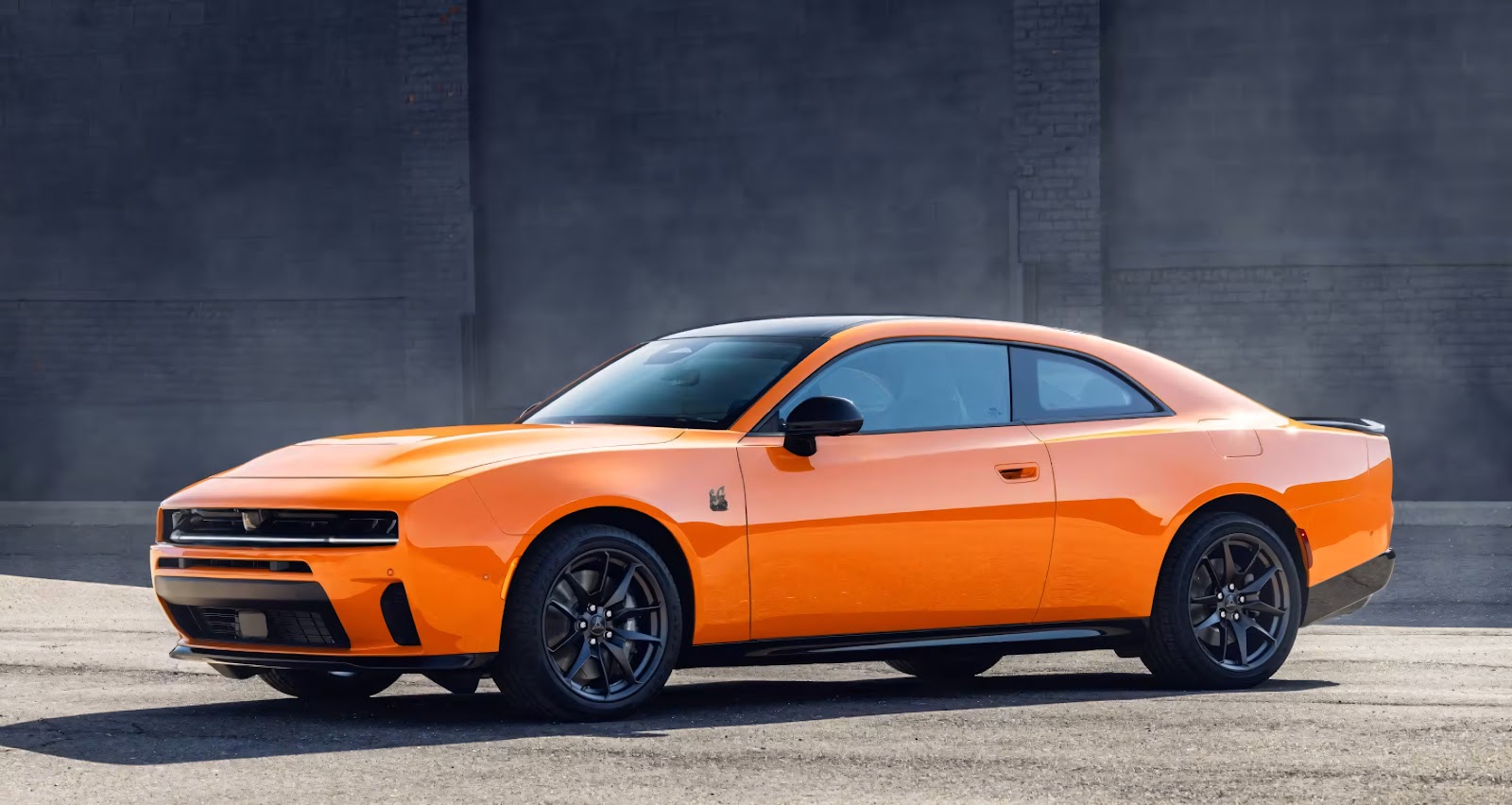
Distinctive Scat Pack Design Elements
The Scat Pack announces its performance visually. Dual hood heat extractor vents (functional, not decorative), “392 HEMI” fender badges, more aggressive front and rear fascias, and larger air intakes all set it apart. Additional Scat Pack-specific features include:
- Distinctive rear spoiler with a more aggressive profile
- Unique Scat Pack emblems on front fenders and rear decklid
- Blacked-out trim pieces and accent packages on many models
- Performance-oriented side sill extensions
- Wider tires (275mm front vs. RT’s 245mm)
Wheel and Brake Package Differences
Both models use 20-inch wheels, but the Scat Pack’s are wider and styled more aggressively. The most telling visual cue: Brembo brake calipers (often in red or black) visible through the wheel spokes. These aren’t cosmetic—they deliver meaningfully better stopping power backed by 14.2-inch front rotors vs. the RT’s 13.6-inch setup.
| Feature | RT | Scat Pack |
|---|---|---|
| Front Tire Width | 245mm | 275mm |
| Brake System | Standard rotors and calipers | Brembo performance brakes |
| Front Rotor Size | 13.6 inches | 14.2 inches |
| Caliper Color | Black or unpainted | Often red or black (visible) |
Insurance and Total Ownership Costs
For a 35-year-old driver with a clean record, insurance runs $150–$200/month for an RT and $200–$275 for a Scat Pack. That gap widens for younger drivers or those with points on their license—potentially adding $1,000 or more annually.
Complete 3-Year Ownership Cost Analysis
| Cost Category | Dodge Charger RT | Dodge Charger Scat Pack | Difference |
|---|---|---|---|
| Purchase Price | $25,000 | $35,000 | $10,000 |
| Fuel Costs (3 years) | $7,200 | $8,400 | $1,200 |
| Insurance (3 years) | $6,480 | $8,640 | $2,160 |
| Maintenance (3 years) | $2,800 | $3,200 | $400 |
| Projected Depreciation | $6,500 | $9,100 | $2,600 |
| Total 3-Year Cost | $47,980 | $64,340 | $16,360 |
The three-year difference is roughly $16,360—about $450 more per month for the Scat Pack when factoring in purchase price, fuel, insurance, and depreciation. Whether that premium is worth it depends entirely on how much the extra 115 horsepower and track-ready hardware matter to you.
Best Model Years for Used Buyers
Not all Charger model years are created equal. The 2017 and 2018 models represent the reliability sweet spot—early kinks were resolved, proven engineering was in place, and prices have dropped to reflect their age without sacrificing capability. The 2020 and 2021 models are also highly reliable but carry a higher price tag.
| Model Year Range | Reliability Rating | Key Features | Value Score | Best For |
|---|---|---|---|---|
| 2015–2016 | Good | Refreshed styling, basic tech | Excellent | Budget buyers willing to research history |
| 2017–2018 | Excellent | Refined platform, proven systems | Outstanding | Best overall value for most buyers |
| 2019 | Very Good | Updated Uconnect, better safety tech | Very Good | Tech-focused daily drivers |
| 2020–2021 | Excellent | Mature platform, full safety suite | Good | Buyers wanting a near-new experience |
Dodge Charger RT vs Scat Pack: Which Should You Buy Used?
The Smart Pick for Value-Minded Buyers
If you’re budget-conscious, the RT is the clear winner. It delivers 370 horsepower, genuine V8 sound, the same interior space, and the same daily-use practicality as the Scat Pack—for $8,000–$12,000 less up front, plus savings on insurance, fuel, and brake maintenance. The RT is a muscle car you’ll enjoy without financial stress.
The Ultimate Choice for Speed Seekers
If spirited driving is your priority, the Scat Pack delivers in ways the RT simply cannot. The extra 115 horsepower is felt every time you accelerate, the Brembo brakes inspire confidence in any situation, and features like launch control and performance monitoring make every drive an event. For serious enthusiasts, the premium is worth it.
The Practical Choice for Everyday Commuting
Surprisingly, the RT edges out the Scat Pack for pure daily driving. Its softer suspension handles rough Killeen roads more comfortably, 370 horsepower is more than enough for real-world driving, and lower operating costs keep your monthly budget predictable. The Scat Pack’s stiffer ride and premium fuel requirement can feel like compromises when you’re just running errands.
At our Lampas, TX location and our Kemper dealership, we encourage every buyer to test drive both trims. Nothing replaces the real-world feel of sitting in the seat and pressing the accelerator yourself. Our team will help you find the right Charger without pressure.
✅ Key Takeaways
- The RT (5.7L, 370 hp) is the better pick for budget-conscious buyers and daily drivers
- The Scat Pack (6.4L, 485 hp) is for buyers who prioritize maximum performance
- The typical used price gap is $8,000–$12,000 between trims
- 2017–2018 models offer the best balance of reliability, features, and value
- Both trims share the same interior space, tech platform, and four-door practicality
- Always get a pre-purchase inspection regardless of the trim you choose
Conclusion
The Dodge Charger RT and Scat Pack both deliver real American muscle in a practical four-door package. The RT is the smart value choice—genuine V8 sound, lower costs, and all-day comfort. The Scat Pack is for buyers who want to feel every one of those 485 horsepower. Both models hold their value well and offer the kind of HEMI experience you simply can’t replicate in any crossover or sedan at the same price.
At McLeod Auto Sales in Killeen, Texas, we stock both trims and can walk you through everything—from financing options to pre-purchase inspections. Visit us, take both for a test drive, and let the cars make the decision for you. Ready to find your muscle car? Browse our Dodge muscle car inventory or stop by in person—we’re here to help.
FAQ: Dodge Charger RT vs Scat Pack
What’s the main difference between the Dodge Charger RT and Scat Pack?
The RT uses a 5.7L HEMI V8 with 370 hp and 395 lb-ft of torque. The Scat Pack steps up to a 6.4L 392 HEMI producing 485 hp and 475 lb-ft. The Scat Pack also adds Brembo brakes, sport-tuned suspension, functional hood scoops, and enhanced interior features. In the used market, the Scat Pack commands an $8,000–$12,000 premium over comparable RTs.
Is the Scat Pack worth the extra money over the RT?
It depends on your priorities. If you love high-performance driving, the Scat Pack’s extra power, better brakes, and sportier suspension are genuinely worth the premium. If you want a fast V8 for daily use without the higher upfront and ongoing costs, the RT is an excellent value. At McLeod Auto Sales, we help you decide based on your specific needs and budget.
Which Dodge Charger model year is most reliable for used buyers?
The 2017–2018 models are widely considered the sweet spot for reliability and value. They came after early production issues were addressed and before the 2019 updates added new complexity. The 2020–2021 models are also highly reliable but carry a higher price. We inspect every Charger thoroughly and provide detailed vehicle histories to help you choose confidently.
What fuel economy should I expect from the RT versus Scat Pack?
The RT gets 16–18 MPG in mixed driving and up to 24–26 MPG on the highway on midgrade fuel. The Scat Pack returns 14–16 MPG combined and requires premium (91-octane or higher). Over a year, the RT typically saves $600–$800 in fuel costs compared to the Scat Pack.
Can I visually tell the difference between an RT and Scat Pack?
Yes. The Scat Pack has dual functional hood heat extractor vents, “392 HEMI” fender badges, wider tires, and Brembo brake calipers (often red or black) visible through the wheel spokes. The RT has a single hood scoop and standard HEMI badging without the cubic inch callout. The differences are immediately noticeable once you know what to look for.
What’s the total cost of ownership difference between RT and Scat Pack over three years?
Based on a typical used purchase, the Scat Pack costs roughly $16,360 more than an RT over three years when factoring in the higher purchase price, fuel, insurance, and depreciation. That works out to approximately $450 more per month. Whether the extra 115 hp and track-ready hardware justify that difference is a personal decision.
Are both the RT and Scat Pack good for daily driving and family use?
Both are genuinely practical daily drivers. They share the same interior dimensions (seating for five, 40+ inches of rear legroom, 16.5 cu-ft trunk) and four real doors. The RT has a slight edge for pure daily commuting due to its softer suspension on rough roads. The Scat Pack’s firmer ride is a reasonable trade-off for buyers who value weekend performance.
Connect with us


